-
Name
-
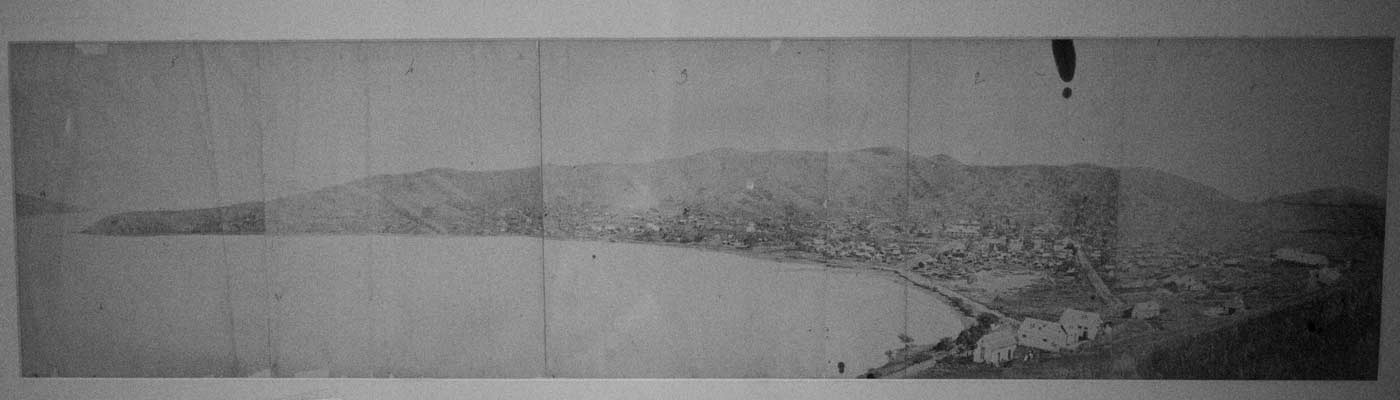
Penal Colony of New Caledonia, Bagne de l'île Nou
-
Type of carceral site
-
Penal settlement
-
Dates of use
-
1864 – 1927
-
Quote
-
We heard the waves beating eternally on the reefs, and above us we saw the cracked mountain peaks from which torrents of water poured noisily down to the sea during the frequent great rains. At sunset we watched the sun disappear into the sea, and in the valley the twisted white trunks of the niaoulis glowed with a silver phosphorescence.
Autobiographical narrative.
Michel, Louise. The Red Virgin: Memoirs of Louise Michel, edited and translated by Bullitt Lowry and Elizabeth Ellington Gunter. University of Alabama Press, 1981 [1886], pp. 91-92.
-
War is come.
Blood will flow
Over the earth
Like water.
The adoueke
Must be blood.
Translation of chant.
Michel, Louise. The Red Virgin: Memoirs of Louise Michel, edited and translated by Bullitt Lowry and Elizabeth Ellington Gunter. University of Alabama Press, 1981 [1886], p. 114.
-
The creation of indigenous reservations in the French territory of the Pacific comprized three objectives:
- To drive back and confine the indigenous population in order to free up land for settlers.
- To settle the indigenous population in delimited spaces with the aid of a juridical definition of indigenous collective property.
- The enclose this population in these spaces through the indigénat – the particular legal code applied to indigenous people.
The thinking behind the indigenous reservation, in the French case, finds its origin in the cantonnement (confinement) as first applied in Algeria. Cantonnement was originally an administrative concept referred to in the 1827 code regulating access to and use of French forests. The concept served to transform rights of use of wooded areas into full rights of property over restricted parts of these areas.
History.
Merle, Isabelle. ""Native Reservations in Australia and New Caledonia: A Colonial Reality and Its Variations in Aboriginal and Kanak Worlds."" The Journal of Pacific History, vol. 60, no. 4, 2025, p. 592."
-
'Caledonie,' - 'Ile Nou.' These are words of evil meaning to nearly every Frenchman, and a few years ago they were also words of terror to evildoers in France. The sensational romanticists of ten years ago who took criminal themes for their subject were wont to paint New Caledonia as an insular hell on Earth and Ile Nou as the lowest circle of the inferno [...] these writers had been deportees [...] and they, being naturally 'against' the Government, dipped their pens in red ink and wrote luridly incorrect accounts of the horrors which were daily and hourly perpetrated within the white walls of the prison buildings of Ile Nou.
Grrifiths, George. In an Unknown Prison Land: An account of convicts and colonists in New Caledonia with jottings out and home. Hutchinson, 1901, p. 172.
-
Authority
-
Transportation Law of 1854 (often referred to as loi du 30 mai 1854 sur la transportation)
-
Contact
-
Dashiell
-
identifier
-
SITE-NMA